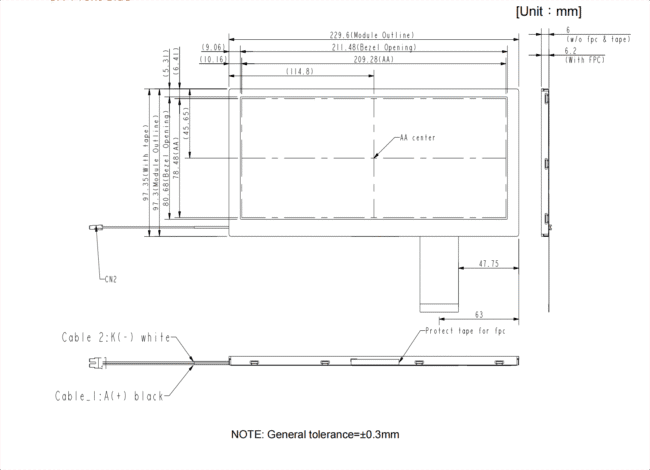
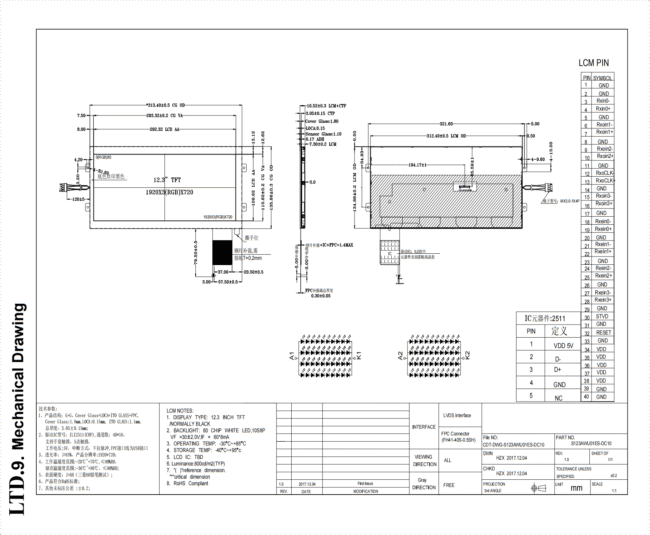
Short answer: No, a TFT display is not inherently a touch screen.
A TFT (Thin-Film Transistor) display is a visual output device, while touch functionality is provided by an additional touch panel layer that can be integrated on top of the TFT display when required.
In other words, a TFT display can become a touch screen, but only after combining it with a suitable touch technology such as capacitive or resistive touch.
What Is a TFT Display?
A TFT display is a type of active-matrix LCD that uses thin-film transistors to control each individual pixel. Each pixel has its own dedicated transistor, allowing precise voltage control, faster response times, and improved image quality compared to passive-matrix LCDs.
TFT displays are widely used in:
- Industrial control panels
- Medical devices
- Consumer electronics
- Automotive dashboards
- Handheld instruments
They are known for high resolution, fast refresh rates, and stable image performance.
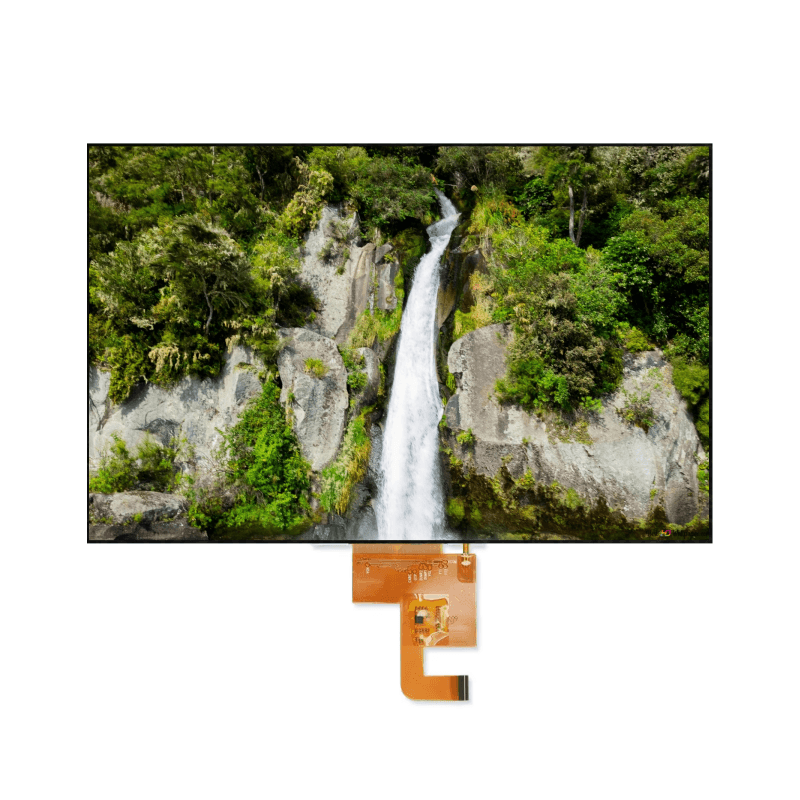
What Is a Touch Screen?
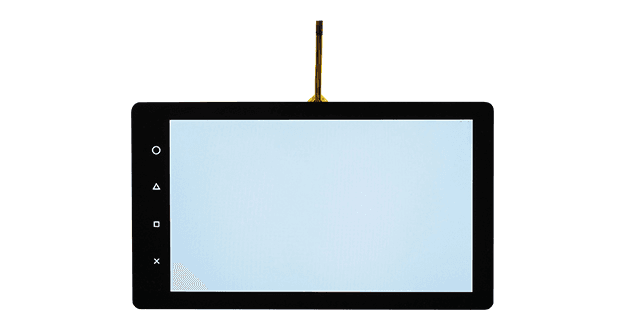
A touch screen is an input interface that detects user interaction by touch. It is not a display by itself, but a transparent sensor layer placed on top of a display (such as TFT, OLED, or E-Paper).
Common touch technologies include:
- Resistive touch
- Capacitive touch
- Infrared (IR)
- Surface acoustic wave (SAW)
When a touch panel is laminated or assembled with a TFT display, the result is commonly referred to as a TFT Touch Screen Module.
How Does a TFT Touch Screen Work?
A TFT touch screen works by combining two independent systems:
- TFT Display Layer
- Generates images using liquid crystal modulation
- Controlled by pixel-level thin-film transistors
- Touch Panel Layer
- Detects touch input (finger, stylus, or glove)
- Sends coordinate data to a touch controller IC
The system MCU or processor then interprets:
- Display signals (RGB, LVDS, MIPI, etc.)
- Touch signals (I²C, USB, SPI)
These two subsystems work together but remain functionally independent.
Advantages and Disadvantages of TFT Touch Screens
| Aspect | Advantages | Disadvantages |
|---|---|---|
| Image Quality | High resolution, good color reproduction | Limited contrast vs OLED |
| Touch Integration | Supports multiple touch technologies | Adds thickness and cost |
| Response Speed | Fast pixel response | Touch latency depends on controller |
| Durability | Industrial-grade options available | Touch surface can scratch |
| Power Consumption | Moderate and predictable | Higher than non-touch TFT |
Common Types of TFT Touch Screens
By Touch Technology
| Touch Type | Characteristics | Typical Use Cases |
|---|---|---|
| Resistive Touch | Pressure-based, works with gloves | Industrial, medical |
| Capacitive Touch | Finger-based, multi-touch support | Consumer, HMI |
| Projected Capacitive (PCAP) | High accuracy, gesture support | Automotive, premium devices |
By Integration Method
| Structure | Description | Pros | Cons |
|---|---|---|---|
| Air Bonding | Touch panel separated by air gap | Low cost | Reflection, dust risk |
| Optical Bonding | Touch panel laminated with LOCA/OCA | Better clarity, durability | Higher cost |
How to Choose a TFT Touch Screen?
When selecting a TFT touch solution, engineers should consider:
- Application Environment
- Indoor vs outdoor
- Temperature range
- Glove or water operation
- User Interaction Requirements
- Single-touch or multi-touch
- Gesture support
- Stylus compatibility
- Optical Performance
- Brightness (cd/m²)
- Viewing angle
- Sunlight readability
- Mechanical Constraints
- Thickness
- Bezel size
- Mounting method
- Interface Compatibility
- Display: RGB, LVDS, MIPI
- Touch: I²C, USB
When Should You Choose a TFT Touch Screen?
A TFT touch screen is the right choice when:
- Visual feedback and user input are both required
- The system needs a compact HMI solution
- Physical buttons are impractical or undesirable
- UI flexibility and firmware updates are important
For purely display-only applications, a non-touch TFT may be more cost-effective.
Industry Applications
TFT touch screens are widely used in:
- Industrial Automation – HMI panels, PLC interfaces
- Medical Equipment – Patient monitors, diagnostic devices
- Automotive – Instrument clusters, infotainment systems
- Consumer Electronics – Smart home devices, appliances
- Retail & POS – Payment terminals, kiosks
Future Technology Trends
The future of TFT touch screens is evolving in several directions:
- Thinner modules through full lamination
- Higher brightness for outdoor and automotive use
- Improved glove and wet-touch performance
- Integration with AI-driven HMIs
- Hybrid solutions combining TFT with OLED or E-Paper elements
While OLED is growing rapidly, TFT remains dominant in industrial and automotive markets due to its stability, lifespan, and cost control.
Conclusion
A TFT display is not inherently a touch screen, but it can be easily transformed into one by integrating an appropriate touch panel. This modular design gives engineers the flexibility to select the right display + right touch technology for each application.
For projects requiring reliability, scalability, and long-term supply stability, TFT touch screens remain a proven and versatile solution.
Frequently Asked Questions (FAQ)
1. Is every TFT display a touch screen?
No. Touch functionality requires an additional touch panel layer.
2. Can a TFT display support multi-touch?
Yes, when combined with a capacitive or PCAP touch panel.
3. Which is better: resistive or capacitive touch?
Resistive is better for harsh environments; capacitive is better for user experience.
4. Does adding touch affect display quality?
Slightly, but optical bonding significantly minimizes reflection and light loss.
5. Is TFT touch screen suitable for industrial use?
Yes. Industrial-grade TFT touch modules are widely used and highly reliable.