Which Is Better: TFT Screen or LED Screen?
Answer upfront: TFT screens and LED screens address fundamentally different display requirements.
TFT technology is optimized for high-resolution, close-viewing, and interactive applications, whereas LED displays are designed for high-brightness, long-distance, and large-area visualization. Selection should be driven by system-level requirements rather than perceived image quality alone.
1. TFT Screen: Definition and Operating Principle
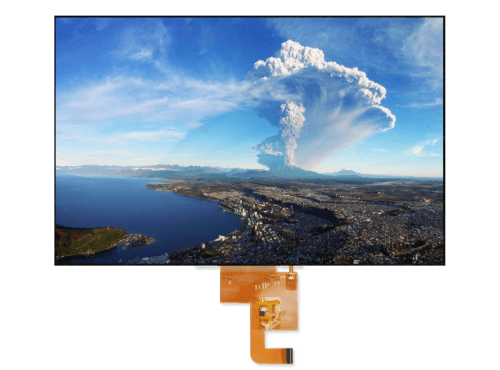
A TFT (Thin-Film Transistor) screen is an active-matrix LCD technology in which each pixel is controlled by an individual transistor.
Working Principle
- A backlight (typically LED-based) provides uniform illumination
- Liquid crystal molecules modulate light transmission under voltage
- TFT transistors ensure fast pixel addressing and stable image refresh
- RGB color filters generate full-color output
This architecture enables precise pixel-level control, making TFT suitable for detailed visual information.
Key Advantages
- High pixel density and resolution
- Accurate color rendering
- Fast response time
- Compact form factor
- Seamless integration with touch panels
Limitations
- Lower peak brightness compared to LED video walls
- Viewing angle performance depends on panel type
- Requires constant backlight operation
2. LED Screen: Definition and Operating Principle
An LED screen (LED display) is a self-emissive display system where each pixel is composed of red, green, and blue LEDs.
Working Principle
- Individual LEDs emit light directly
- Brightness and color are controlled by current modulation
- No backlight or liquid crystal layer is involved
This direct emission structure allows LED screens to achieve very high luminance levels.
Key Advantages
- Extremely high brightness
- Excellent outdoor visibility
- Scalable to very large sizes
- Wide viewing angles
- Long operational lifetime
Limitations
- Pixel density is limited at small sizes
- Higher system cost for fine-pitch models
- Less suitable for close-range viewing
3. TFT vs LED: Technical Comparison
| Parameter | TFT Screen | LED Screen |
|---|---|---|
| Display Mechanism | LCD (non-emissive) | Self-emissive |
| Brightness | Moderate | Very high |
| Pixel Density | High | Pitch-dependent |
| Viewing Distance | Short | Medium to long |
| Power Efficiency | Higher (small size) | Lower (large area) |
| Typical Size Range | 1″–20″ | >20″, scalable |
| Integration | Touch, embedded systems | Modular display systems |
4. Typical TFT Screen Variants
| TFT Type | Technical Focus | Common Use |
|---|---|---|
| TN TFT | Fast switching | Industrial HMI |
| IPS TFT | Wide viewing angle | Medical, instrumentation |
| VA TFT | High contrast | Automotive displays |
| LTPS TFT | High resolution, low leakage | Mobile devices |
5. Typical LED Display Types
| LED Technology | Pixel Pitch | Application |
|---|---|---|
| DIP LED | Large | Outdoor advertising |
| SMD LED | Medium | Indoor signage |
| Mini LED | Small | Commercial high-end displays |
| Micro LED | Ultra-small | Next-generation displays |
6. Selection Guidelines (Engineering Perspective)
Use a TFT Screen if:
- The user views the display at close range
- Fine text or graphics must remain legible
- Touch interaction is required
- Power consumption is constrained
- System size is compact
Use an LED Screen if:
- High ambient light is present
- Viewing distance exceeds several meters
- Display area must scale beyond standard panel sizes
- System robustness is critical
7. Industry Applications
| Sector | TFT Applications | LED Applications |
|---|---|---|
| Industrial Automation | Control panels | Production dashboards |
| Medical | Diagnostic monitors | Information boards |
| Transportation | Instrument clusters | Station signage |
| Retail | POS terminals | Advertising displays |
| Automotive | Infotainment systems | Commercial signage |
8. Technology Development Trends
TFT Displays
- Oxide and LTPS backplanes
- Higher brightness with improved efficiency
- Flexible and curved panel designs
- Embedded touch and system integration
LED Displays
- Mini LED and Micro LED scaling
- Reduced pixel pitch for closer viewing
- Improved thermal and power efficiency
- Seamless large-area integration
9. Conclusion
From an engineering standpoint, TFT and LED displays are complementary rather than competing technologies.
TFT dominates precision-oriented, close-viewing applications, while LED excels in high-impact, large-scale visualization. Proper selection requires balancing optical performance, system constraints, and application environment.
FAQ
1. Can a TFT screen replace an LED screen?
No. TFT screens are not designed for large-scale or long-distance viewing.
2. Are LED screens suitable for detailed UI content?
Only fine-pitch LED displays can handle detailed content at close range.
3. Which consumes less power?
TFT screens generally consume less power for small to medium displays.
4. Are TFT screens outdated compared to LED?
No. TFT remains essential for embedded and precision display systems.
5. Is Micro LED a replacement for TFT?
Not in the near term due to cost and manufacturing complexity.