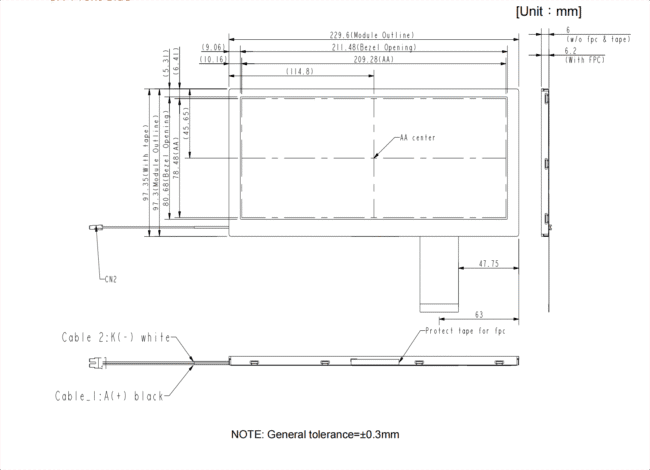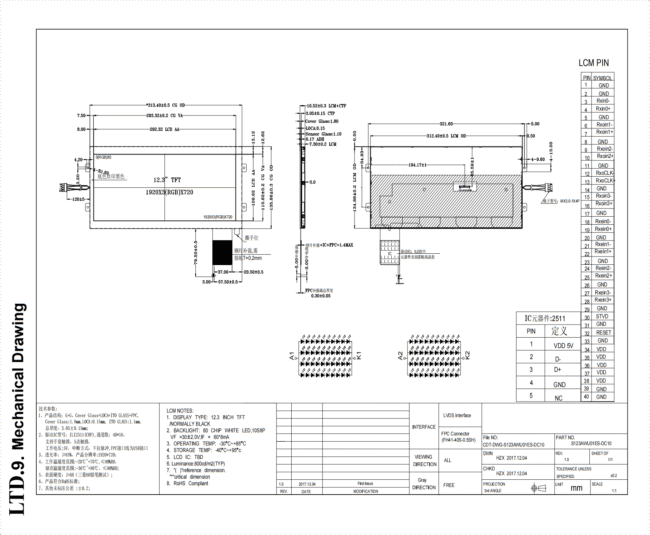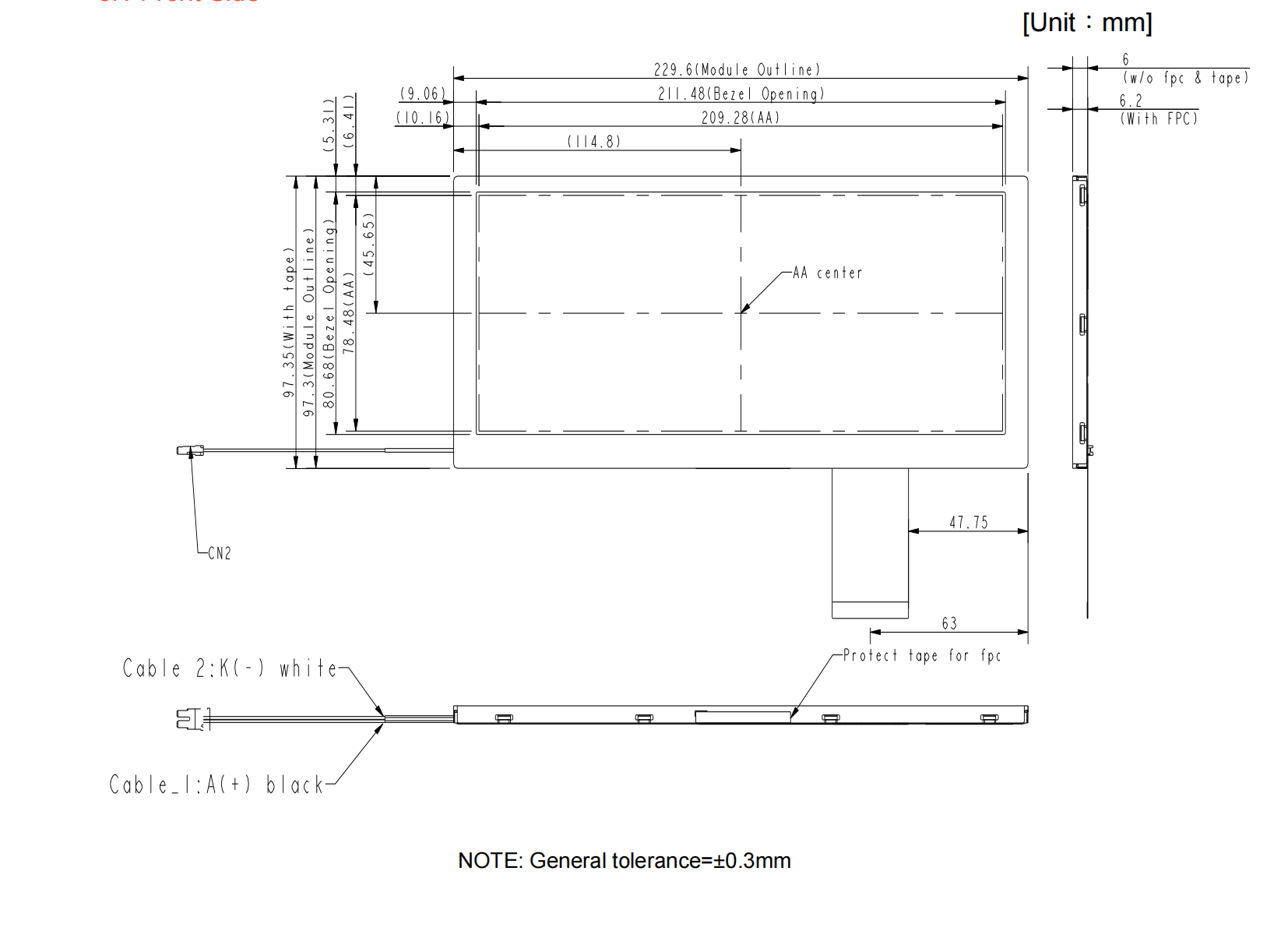
TFT LCD interfaces can be divided into two categories: interfaces that directly drive the LCD panel and video interfaces commonly used between the main board and the display module.
1. Parallel RGB / TTL Interface
Also known as RGB888, RGB565, or TTL interface, commonly used in small-to-medium-size TFT modules.
- Data signals: parallel
R/G/Bdata lines - Synchronization signals:
HSYNC,VSYNC,DE,PCLK - Common configurations: 18-bit, 24-bit
- Features: direct pixel data output, high speed, low latency, suitable for MCUs and MPUs
- Applications: home appliances, instruments, automotive central displays, industrial screens
- Disadvantages: many signal lines; not ideal for long-distance transmission or large high-speed screens
2. MCU Parallel Interface
Common implementations include 8080 or 6800 bus interfaces.
- Signals:
D0–D15,RS,WR,RD,CS - Usually works with display controllers such as SSD1963 or ILI9488
- Features: occupies many GPIOs, but reduces the video output workload on the host
- Applications: small-to-medium color screens, such as 2.4–5 inch modules
- Disadvantages: refresh performance is usually lower than RGB interfaces
3. SPI Interface
Commonly used in small-size or low-resolution TFT modules.
- Typical signals:
SCLK,MOSI,CS,DC,RST - Features: few connections and simple control
- Applications: 0.96–3.5 inch screens, development boards, wearable devices
- Disadvantages: limited bandwidth; may struggle with high-resolution or high-refresh-rate content
4. I²C Interface
- Mainly used for very small screens, character displays, or low-cost color screens with built-in controllers
- Features: only two signal lines required,
SDAandSCL - Disadvantages: very low speed; unsuitable for high-resolution dynamic images
5. LVDS Interface
Common in industrial displays, automotive screens, and medium-to-large LCD panels.
- Uses differential signaling to transmit video data
- Common forms: single-channel and dual-channel LVDS
- Features: strong anti-interference capability, suitable for longer cables and higher resolutions
- Applications: 7–21.5 inch industrial and medical devices
- Disadvantages: requires LVDS transmitter/receiver chips or bridge ICs
6. MIPI DSI
One of the most common high-performance interfaces for mobile devices.
- High-speed serial differential transmission
- Supports high resolutions and refresh rates
- Features: few pins, high speed, relatively low power consumption
- Applications: smartphones, tablets, smart devices, automotive displays
- Disadvantages: complex protocol; usually requires native SoC support or a dedicated bridge chip
7. eDP
Embedded DisplayPort.
- Based on DisplayPort technology
- Features: high bandwidth, supports high resolution and refresh rates, and multi-lane transmission
- Applications: laptops, tablets, high-end embedded devices
- Disadvantages: higher cost for host controller support
8. HDMI / DisplayPort / VGA
These are usually not native interfaces of the TFT panel itself, but video signals output by devices to monitors or driver boards.
- HDMI: common in TVs, monitors, and digital signage
- DisplayPort: common in PCs and high-refresh-rate monitors
- VGA: legacy analog interface
- In practice, these signals usually need to be converted into LVDS, eDP, or MIPI DSI to drive the panel
9. USB / Type-C Display Interface
- Common in portable monitors and external secondary displays
- Usually implemented through DisplayPort Alt Mode or dedicated display chips
- Strictly speaking, this is a device-level video interface rather than a bare-panel interface
Common Choices
| Application | Common Interfaces |
|---|---|
| Small development modules | SPI, I²C |
| Home appliance and industrial control screens | 8080 parallel, RGB |
| Automotive and instrument displays | RGB, LVDS, MIPI DSI |
| Smartphones and tablets | MIPI DSI |
| Laptop screens | eDP |
| Monitors and digital signage | HDMI, DP, LVDS/eDP bridge |
Note: I²C/SPI may sometimes be used for the touch panel rather than the LCD itself. For example, a display may use MIPI DSI while its touch controller uses I²C. To determine this, check the specifications of both the LCD cable and the touch cable.